
Last updated November 25, 2026
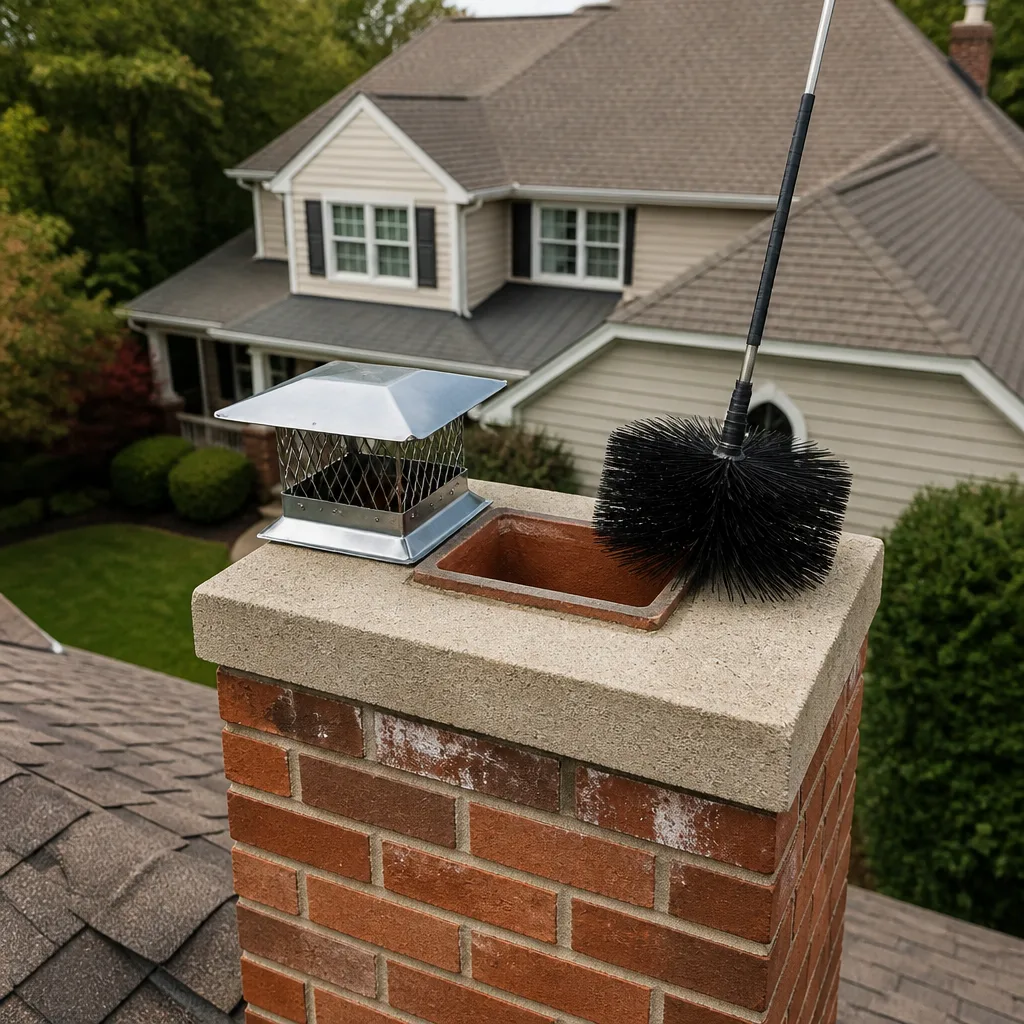 Sweep & inspection
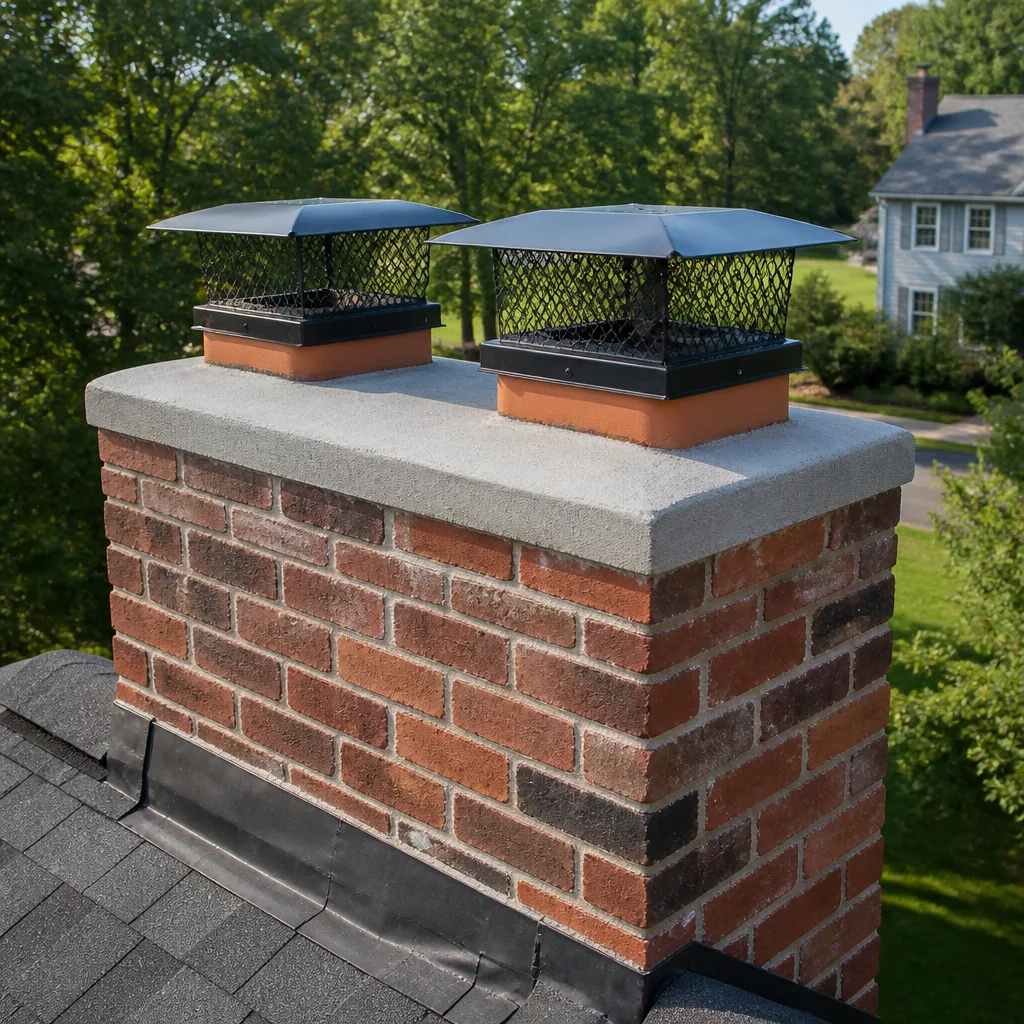 Caps & crowns
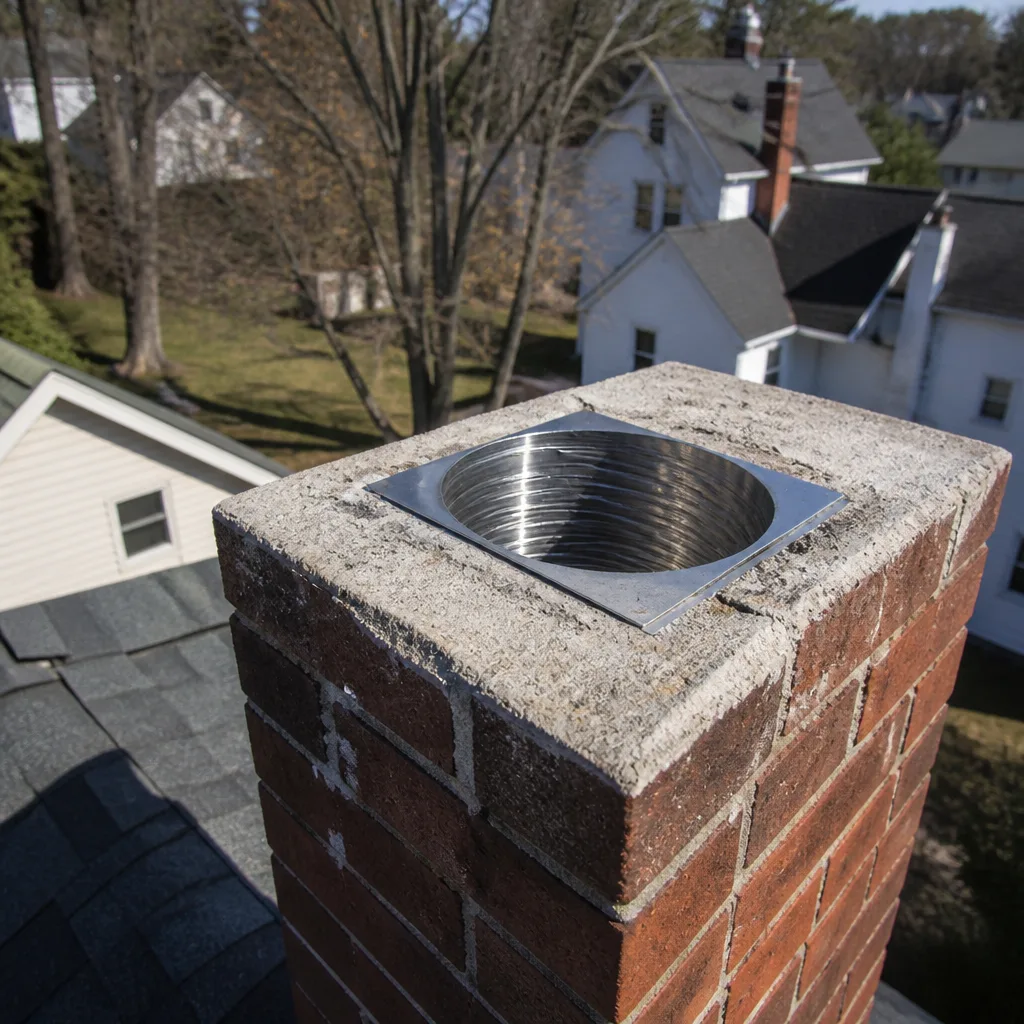 Flue relining
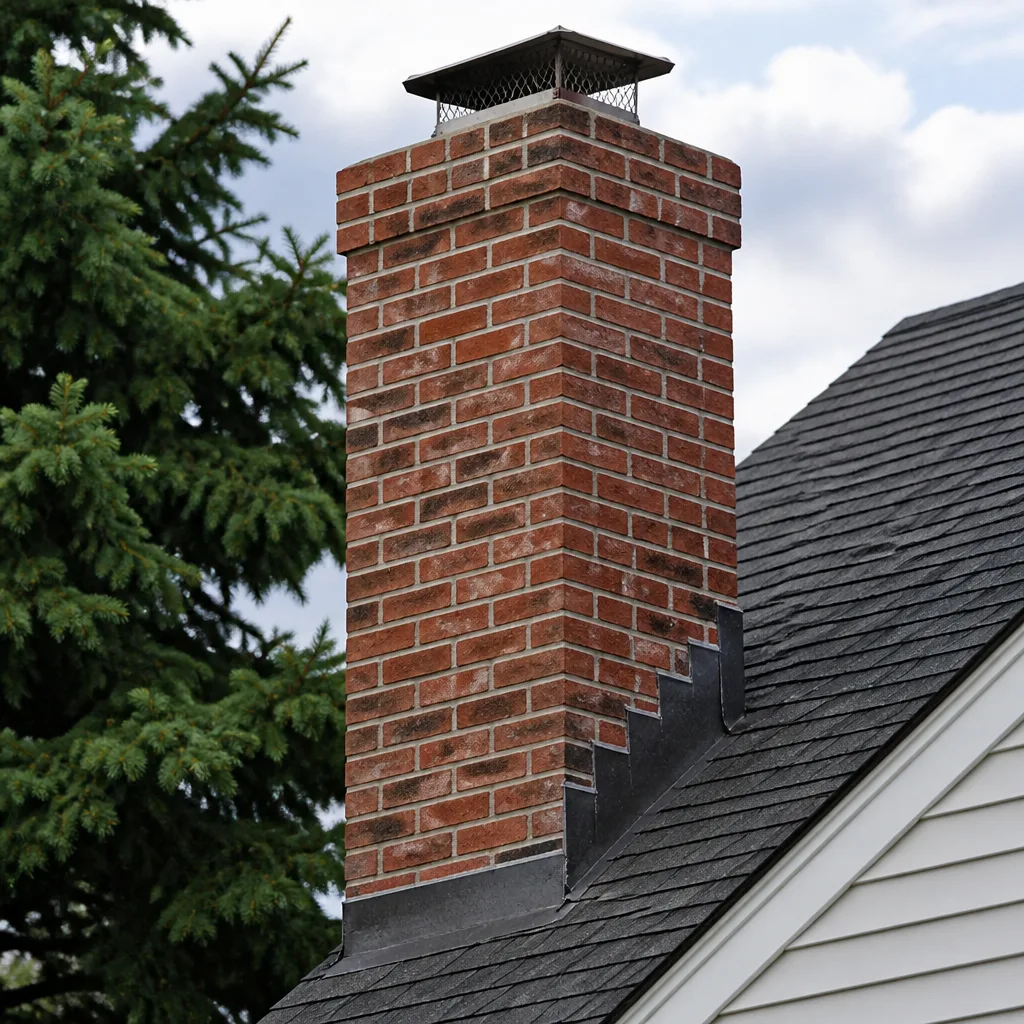 Masonry repair
 Gas fireplace service
Level 1 sweep and inspection to the NFPA 211 annual standard - flue, crown, cap, and flashing checked and photographed
Chimney sweep logs do not sweep chimneys. They loosen some creosote - which then falls where a brush and vacuum still have to collect it.
Choosing the Right Chimney Cleaning Brand: A Buyer’s Guide for West Roxbury
Most homeowners judge a chimney contractor by the truck in the driveway or the price on the estimate. The better question is quieter: can the person standing in your living room name the specific product they plan to put inside your flue? When a contractor can’t tell you which liner system or sealant they’re installing, that’s not an administrative detail. It’s a signal they don’t know enough about materials to make the right call for your chimney. This guide is written to change how you shop. We’ll walk through the product categories that matter, explain why certain professional-grade brands get specified over generic alternatives, and give you the exact questions that separate a spec-driven contractor from one buying whatever’s on sale. If you heat with wood in West Roxbury, the materials inside your chimney are the whole game.
Quick Answer
Choosing the right chimney cleaning brand means choosing the right materials, not just the right name on the van. A knowledgeable contractor specifies professional-grade systems like DuraFlex flexible liners, HeatShield cast-in-place restoration, or Gelco sealants because those products carry rated temperature tolerances, documented installation methods, and manufacturer warranties. Ask any contractor to name the specific product, its temperature rating, and to show the data sheet before you sign. That single question tells you whether you’re dealing with a materials-literate specialist or a generalist guessing.
Styles & brands we work with
- Sweep & inspection
- Caps & crowns
- Flue relining
- Masonry repair
- Gas fireplace service
Table of Contents
- The Four Product Categories Every Chimney Owner Should Understand
- Why DuraFlex, HeatShield, and Gelco Get Specified
- How to Ask About Product Choices Without Sounding Like a Contractor
- Warranty Layers: Who Backs What, and What You Need in Writing
- The Three Questions to Ask Before Any Repair Estimate Is Finalized
- What West Roxbury Chimneys Actually Face
- Sweep, Inspection, or Repair: Matching the Product to the Problem
- How to Read a Chimney Estimate Like a Trade Specialist
The Four Product Categories Every Chimney Owner Should Understand
Chimney work gets discussed in vague terms, which makes it easy to sell vague solutions. In practice, almost every chimney job falls into one of four product categories. Knowing what each is actually for puts you ahead of most homeowners in West Roxbury, and it lets you spot a contractor who’s proposing the wrong tool for the job.
1. Flexible Liner Systems
A flexible stainless-steel liner is a new flue inside your old flue. It’s used when the original clay tile is cracked, misaligned, or too small for the appliance. Flexible liners bend around offsets in the chimney, which matters in older homes where the flue isn’t a straight shot. DuraFlex is one of the names in this category, and it’s specified because the system is engineered as a complete assembly: liner, insulation, top plate, and connection components designed to work together rather than pieced together from mismatched parts.
2. Cast-in-Place Liner Systems
Cast-in-place restoration is the alternative to full relining when the clay tile is deteriorated but the chimney structure is sound. HeatShield is the product most often discussed here. It works by resurfacing the inside of the flue with a formulated mortar applied around a form, creating a smooth, sealed, insulated passage. The advantage is that it addresses deterioration without demolition. Not every flue qualifies, but when it does, it’s a genuinely different solution from tearing out tile.
3. Smoke Chamber Sealants
The smoke chamber is the sloped area just above the damper, and it’s where a lot of performance problems live. Rough parging there causes turbulence, drafting issues, and creosote buildup. Sealants like Gelco are applied to smooth and seal the chamber surface, which improves draft and reduces the places creosote can cling. This is one of the most overlooked products in chimney work, and its absence in a conversation is telling.
4. Crown Coatings
The crown is the concrete cap on top of the chimney that sheds water away from the flue. A cracked crown lets water into the masonry, and in a climate like ours that water freezes and expands through the winter. Crown coatings are flexible, elastomeric materials that bridge hairline cracks and move with the masonry. This is preventative work, and it’s the category most homeowners never hear about until the damage is done. Our chimney cap & crown work exists precisely because stopping water intrusion early is far cheaper than repairing what it ruins.
Why DuraFlex, HeatShield, and Gelco Get Specified
Walk through a wholesale supplier and you’ll find generic liners and generic sealants at lower prices. So why do knowledgeable contractors specify branded systems instead? Not because of a logo. Because the specification matters.
Take flexible liners. A generic liner might meet the minimum standard for a straightforward flue. But the professional systems are engineered with documented wall thickness, alloy composition, and connection hardware rated for the full assembly. When UL listing applies to a complete system rather than a single hose-clamp component, that’s a real difference. DuraFlex and other specified systems carry the data to prove what they’ll do under heat, and that data is what your homeowners insurance and your chimney sweep both care about.
HeatShield is specified for a subtler reason. Cast-in-place restoration requires a contractor who understands when the underlying clay is sound enough to restore rather than replace. The product is only as good as the diagnosis behind it. In our experience, contractors who specify HeatShield tend to be the ones who walk the flue with a camera first, because they know a restoration is a judgment call, not a default.
Gelco and similar smoke chamber products get specified because draft performance is measurable. A smooth, sealed chamber is not cosmetic. It changes how the fireplace behaves on a cold start and how much creosote accumulates over a season. When a contractor names the sealant, they’re telling you they’ve thought about draft, not just the sweep.
Olympia Chimney and Famco round out the picture when it comes to caps, dampers, and venting components. The pattern holds across all of them: manufacturers with published specifications, rated components, and installation standards. That’s the common thread. The brand name is just how you find it.
How to Ask About Product Choices Without Sounding Like a Contractor
You don’t need to be a materials engineer to interview a chimney contractor. You need three questions and a willingness to write down the answers. These apply whether you’re booking a routine chimney sweep or facing a liner decision.
- “What specific product are you planning to install, and why that one?” A spec-driven contractor answers in seconds. A generalist says “a stainless liner” and moves on. The follow-up “why that one” is where the real information lives.
- “What’s the rated temperature tolerance, and can you show me the data sheet?” Every professional product has published specifications. If a contractor can’t produce them, they either don’t have them or don’t know they exist. Either answer is useful to you.
- “Is this a complete system or a set of parts?” Complete systems are engineered to work together. Parts assemblies can perform well, but they depend entirely on how the contractor pairs them. Ask which you’re getting.
- “Who warranties what, and for how long?” More on this below, but ask it out loud and ask for it in writing.
- “Can I see the camera before and after?” A contractor confident in their materials will show you the evidence. One who hedges about it is telling you something.
Notice that none of these require technical knowledge to ask. They just require a contractor who can answer them. The goal isn’t to catch anyone out; it’s to make sure the person working on your chimney has thought about the specific flue in front of them rather than reaching for the same default every time.
Warranty Layers: Who Backs What, and What You Need in Writing
Chimney work involves two distinct warranties, and homeowners routinely confuse them. Understanding the split protects you when something goes wrong a few years down the line.
The manufacturer’s product warranty covers the materials themselves. A stainless liner, a cast-in-place product, a crown coating, and a sealant each carry their own terms. These warranties are often long, but they come with conditions: installation by a trained or authorized installer, use of the correct components, and sometimes registration. If the product fails because it was installed outside the manufacturer’s instructions, the manufacturer will usually decline the claim.
The contractor’s workmanship warranty covers the installation itself. Labor, fit, connections, and how the system was assembled are the contractor’s responsibility. This is the warranty that matters most when a chimney develops a draft problem or a leak after a repair, because it’s the contractor who needs to come back and correct it.
What you need in writing, before the job starts:
- The exact product name and model being installed.
- The manufacturer’s written warranty document, not a verbal summary of it.
- The contractor’s workmanship warranty, in writing, with the term stated.
- Whether the workmanship warranty survives if you later have another contractor service the chimney.
- What voids each warranty, in plain language.
If a contractor resists any of this, treat it as information. A crew that specifies professional-grade products is usually also comfortable handing you the paperwork, because the paperwork is part of the value. A Chimney Sweep West Roxbury project should come with the same documentation whether it’s a sweep or a full relining.
The Three Questions to Ask Before Any Repair Estimate Is Finalized
If you remember nothing else from this guide, remember these three questions. Ask them before you sign anything, and make sure the answers are written into the estimate.
- What specific product are you using? Not “a liner” or “a sealant.” The brand and the model. If the estimate says “chimney repair,” that’s a category, not a specification.
- What’s its rated temperature tolerance? Every professional product is rated for the conditions it’s designed to handle. A written rating is a written commitment.
- Can you show me the data sheet? Manufacturer documentation should be available on request. If it can’t be produced, you’re being asked to take something on faith that should be verifiable.
These three questions cut through marketing instantly. A contractor operating at a professional level will have the answers ready, often before you finish asking. A contractor who’s defaulting to whatever’s available will stall, generalize, or get defensive. Both outcomes tell you what you need to know, and neither costs you anything but a question.
What West Roxbury Chimneys Actually Face
West Roxbury homes get a specific kind of wear on their chimney systems, and it shapes which product categories matter most here. The housing stock runs heavily toward older single-family homes with masonry chimneys and clay-tile flues, many of which have been through decades of heating seasons.
The bigger factor is the winter. Freeze-thaw cycles are relentless, and water is the enemy of every one of those older chimneys. A hairline crack in a crown opens up over a season, water gets into the masonry, and the next freeze pushes it wider. The clay tile lining inside is just as vulnerable. Spalling tile, hairline cracks in the flue, and deteriorated mortar joints are all common findings when we inspect West Roxbury chimneys. That’s why crown coatings and cast-in-place restoration come up so often in this city: they address water and tile deterioration directly, without demolition.
West Roxbury neighborhoods like Centre Street and the streets near the Arnold Arboretum have plenty of homes where the original flue was built for a fireplace and nothing else. When a homeowner adds a wood stove or insert, the existing flue often doesn’t meet the appliance’s requirements. That’s a liner conversation. It’s also a conversation about sizing, insulation, and connection hardware, which is exactly where generic parts systems fall short.
All of which means the brand question isn’t academic here. It’s the difference between a chimney system that performs for decades and one that develops problems within a few seasons.
Sweep, Inspection, or Repair: Matching the Product to the Problem
Not every visit needs a product conversation. A routine sweep is a service, not a materials job. But a sweep is also the moment when a homeowner gets their clearest picture of the chimney’s condition, and that’s where product knowledge becomes useful.
A chimney inspection is where the materials assessment starts. Some contractors bundle inspection into a sweep and treat it as a checkbox. Better practice is to run a camera, evaluate the flue condition, check the crown, the cap, and the smoke chamber, and tell you in plain language what’s fine and what isn’t. A chimney inspection should tell you something substantive, and if it doesn’t, you haven’t had a real one.
Where the product categories land:
- Routine sweep: no materials specified. Just a clean flue and a clear report.
- Small crown or cap issue: crown coating or a replacement cap. Preventative work.
- Deteriorated clay tile, structurally sound: cast-in-place restoration (HeatShield and similar).
- Cracked or misaligned flue, or new appliance: flexible stainless relining (DuraFlex and similar).
- Draft problems and creosote buildup above the damper: smoke chamber sealing (Gelco and similar).
- Fireplace interior damage: fireplace repair, which is its own product category entirely.
These categories overlap in practice. A single project can involve a crown coat, a smoke chamber seal, and a liner. That’s why the product question matters so much: a contractor who only knows one category will propose that category for everything, whether or not it fits.
How to Read a Chimney Estimate Like a Trade Specialist
Most homeowners read the total price and stop. Read the line items instead. A materials-literate contractor writes an estimate with specifics, and the specifics tell you whether the job is well-scoped.
- Look for product names. A line that says “stainless liner” is generic. A line that says the product, model, and length is specific. Specificity is a good sign.
- Look for the components list. A liner estimate should mention insulation, top plate, and connection hardware if those are included. If it doesn’t, ask whether they are.
- Look for a camera report. Some contractors attach before-and-after documentation. That’s the evidence behind the recommendation, and it costs the contractor nothing to provide.
- Look for what’s excluded. A well-written estimate tells you what’s not covered. If the estimate is silent on that, ask.
- Look for the warranty terms. They should be stated or attached. Verbal assurances don’t survive a change of address or a winter.
An estimate written this way is longer than a single-line quote, and that’s fine. It’s also easier to compare against a second estimate, because you’re comparing scopes rather than totals. Two estimates at the same price can describe completely different projects once you read the fine print. The same logic applies to a standalone chimney inspection, which is often the document a real estate transaction or an insurer will actually rely on.
Common Mistakes to Avoid
- Choosing on price alone. The lowest estimate is often the one proposing the cheapest available product, not the right one for your flue. A cheaper liner that doesn’t fit the appliance’s requirements is not a cheaper liner; it’s a problem you’ll pay to fix later.
- Accepting “chimney repair” as a scope. Any line item that describes a category rather than a product leaves the materials choice entirely in the contractor’s hands. Insist on specificity.
- Skipping the crown because everything up top looks fine. Crown cracks are often invisible from the ground. In West Roxbury’s freeze-thaw climate, a small crack that goes unaddressed through one winter can turn into a masonry repair.
- Assuming a generalist is equipped for liner work. A contractor who also does roofing, gutters, and siding is unlikely to carry the same depth of product knowledge on flexible liner systems. The tool set for a sweep is not the tool set for a relining.
- Ignoring the smoke chamber. It’s the most neglected area in chimney work and one of the most common causes of poor draft and creosote buildup. If your contractor never mentions it, ask.
- Taking the manufacturer’s warranty on trust. Request the actual documentation. A warranty you can’t read isn’t a warranty you can rely on.
- Waiting for a visible problem before booking an inspection. Chimney problems are often invisible until they’re expensive. Annual attention is cheaper than reactive repair, every time.
See the difference
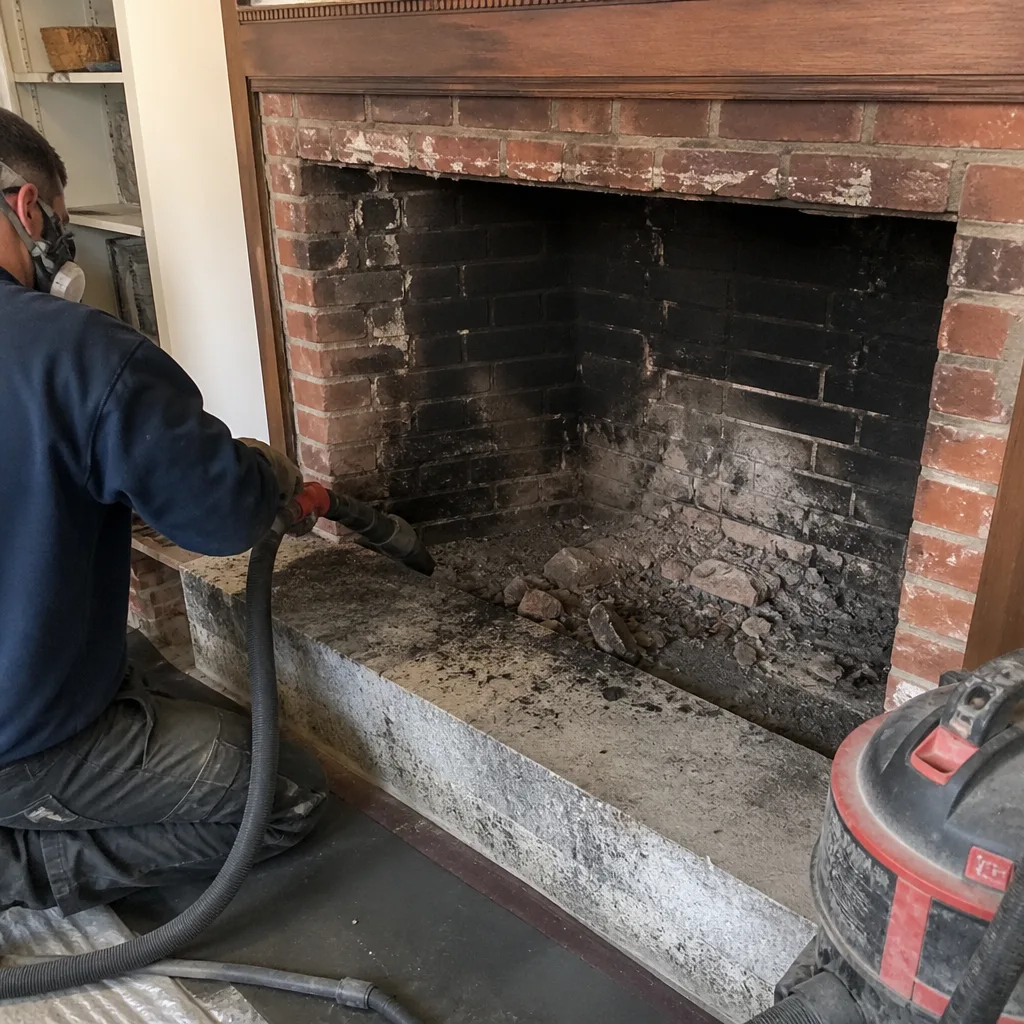 Before
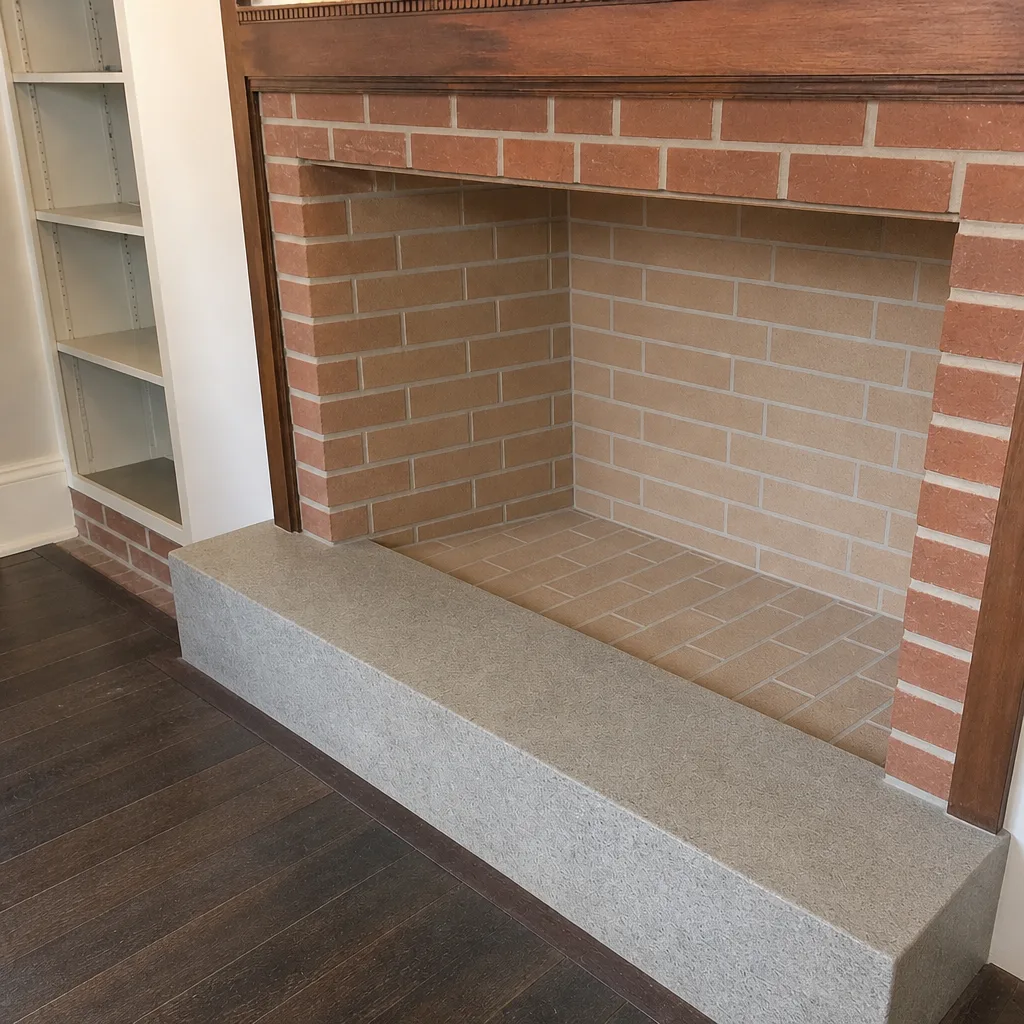 After
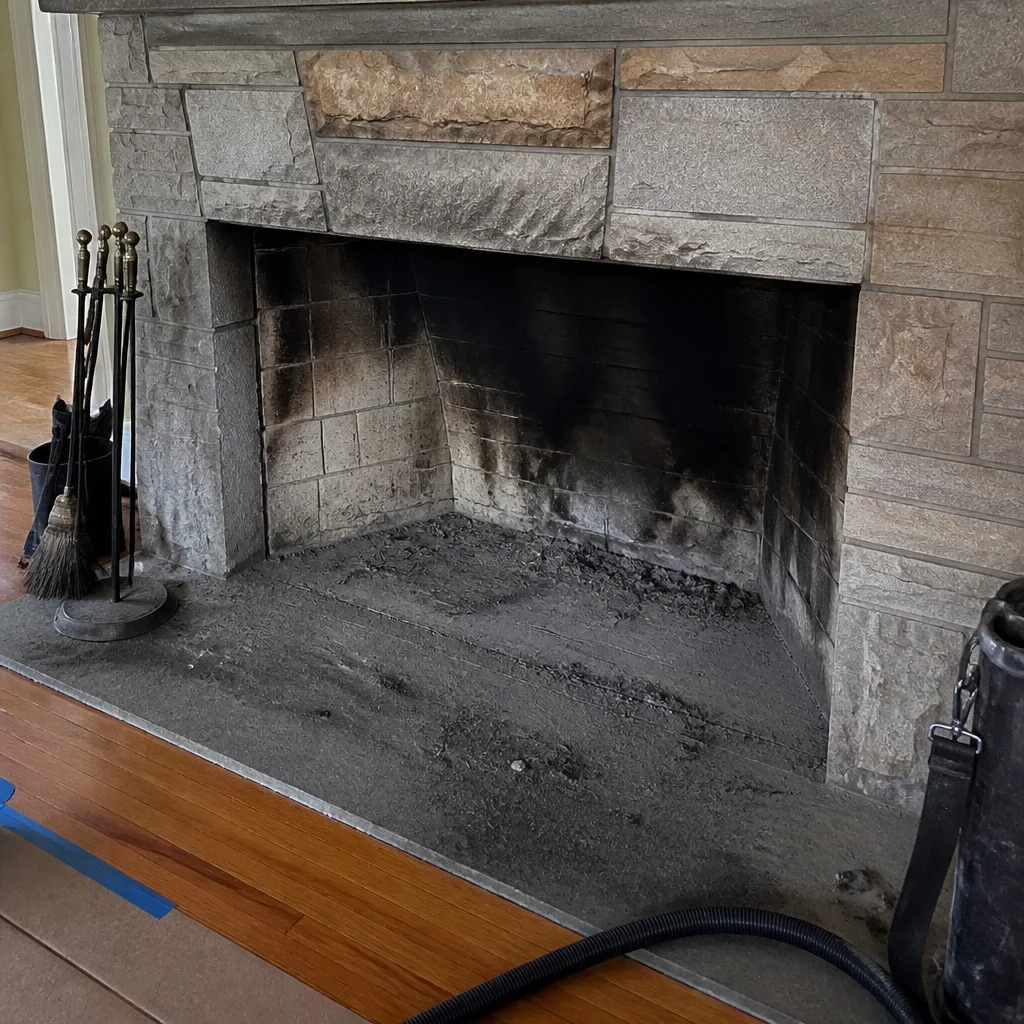 Before
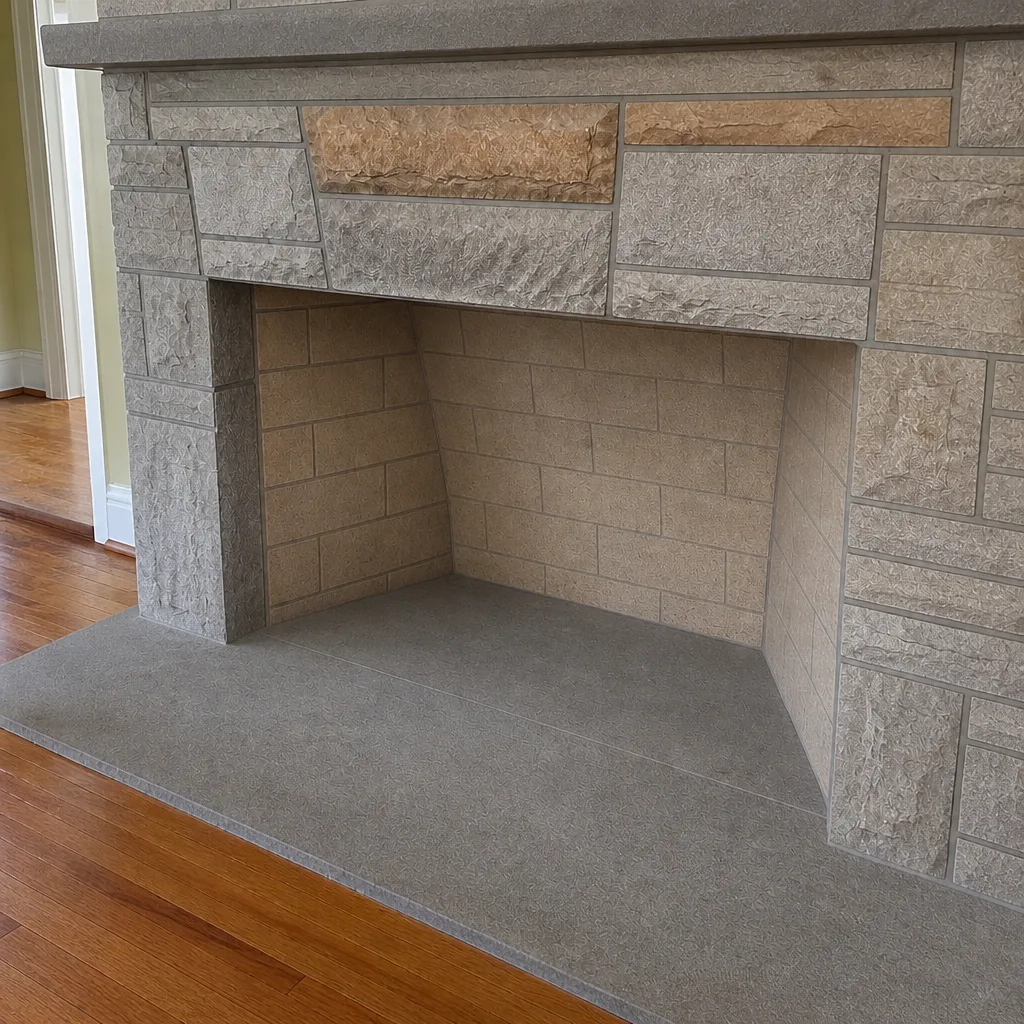 After
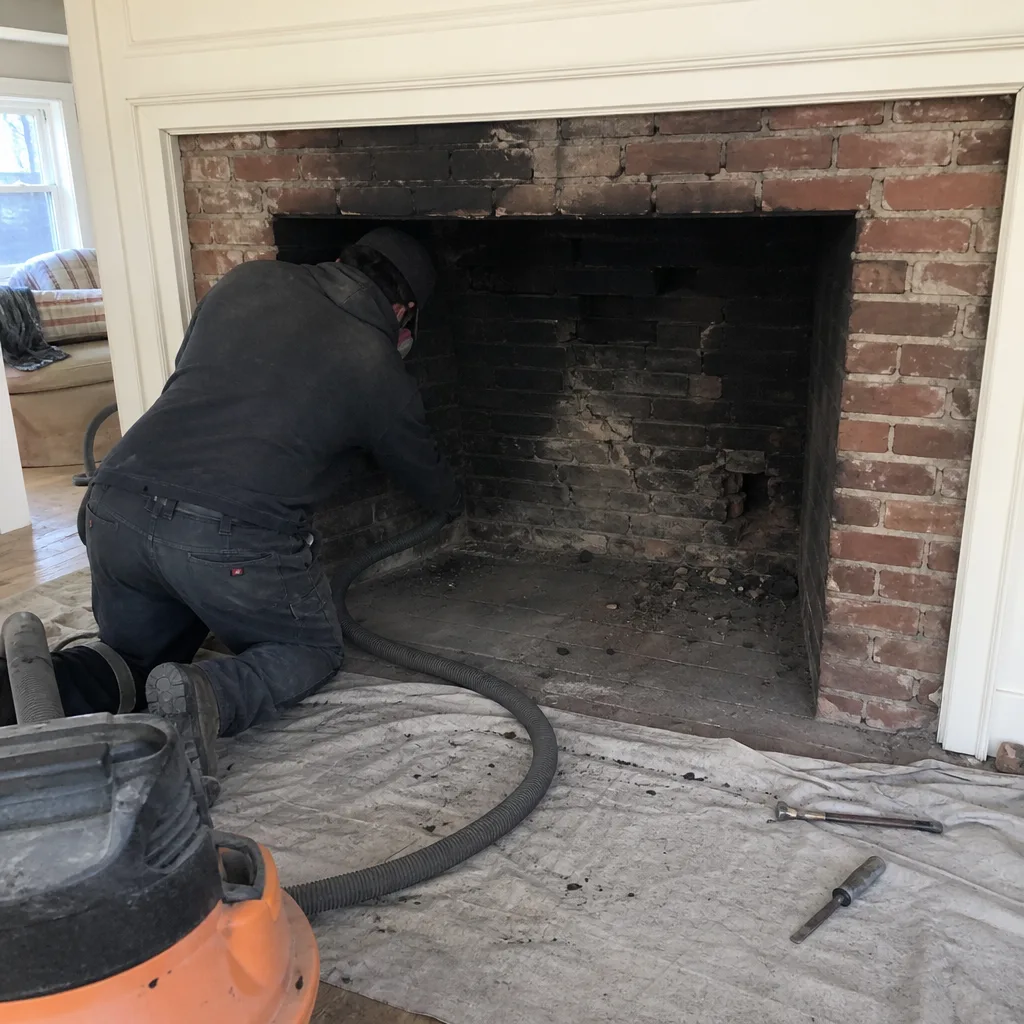 Before
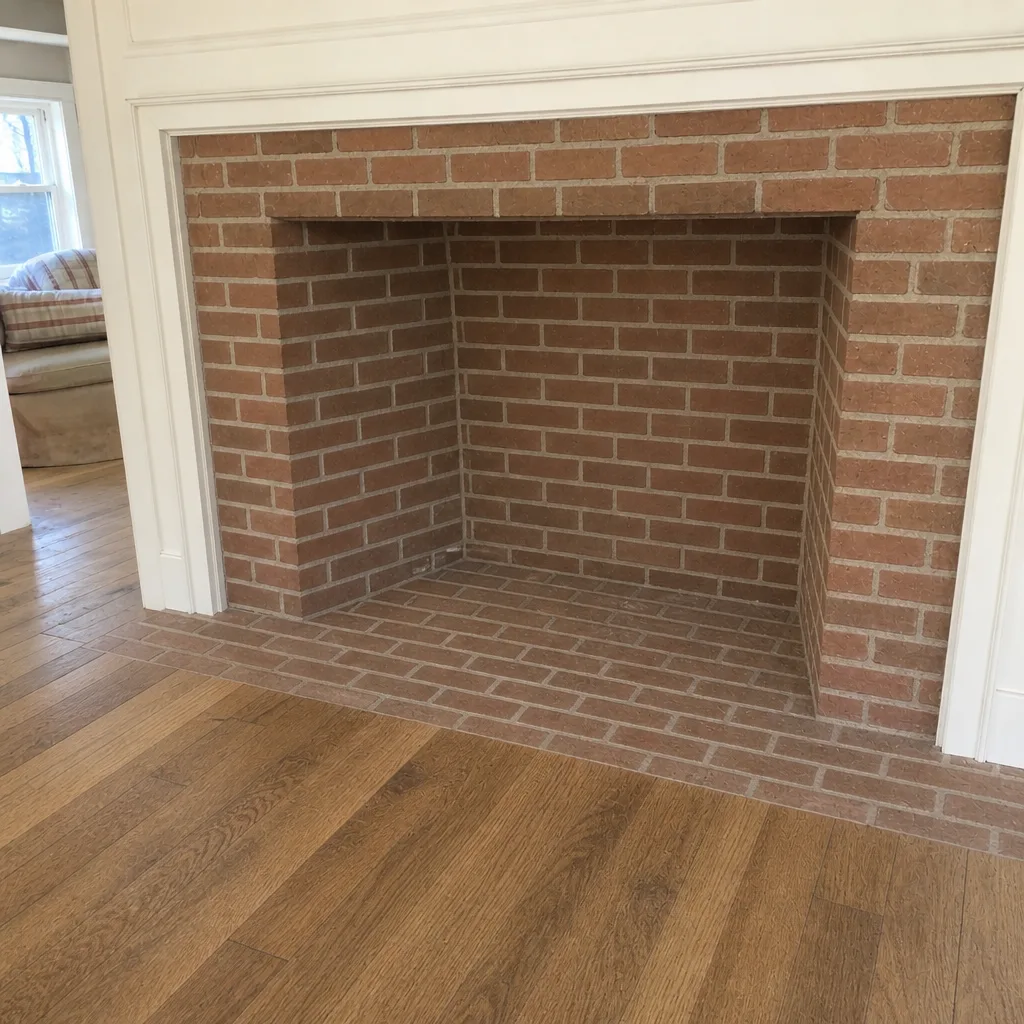 After
When to Call a Professional
Some chimney conditions are safe to observe and some are not, and the distinction matters. A cracked crown, visible spalling on the exterior brick, water staining on the ceiling near the chimney, a fireplace that smokes or drafts poorly, or a chimney that hasn’t been evaluated in a while are all reasons to book an inspection. So is a recent real estate transaction or an insurer asking for documentation. And so is any decision about a liner or a repair where you’re not sure you’ve been told the full story.
Let a trained professional evaluate the flue. Working inside a chimney, especially with a camera and a liner, involves confined-space conditions and, on the roof, real height and fall risk. The liner and sealant decisions themselves require product knowledge that’s genuinely hard to acquire from a website.
Chimney Sweep West Roxbury offers free estimates in West Roxbury. Call (833) 991-9334. We answer 24/7. Fast dispatch from 7am to 7pm, Sunday through Friday.
Frequently Asked Questions
A routine chimney sweep in West Roxbury typically runs in the range of $180 to $300, with the exact price set per job by a written estimate. The estimate is free, and it’s based on the flue’s condition and the access needed rather than a flat national rate. Call (833) 991-9334 for an exact quote, estimates are free.
Not always. A liner is necessary when the existing clay tile is cracked, misaligned, spalling, or undersized for the appliance, and a qualified contractor should show you the camera evidence before recommending one. If the tile is sound and properly sized, a sweep or a cast-in-place restoration may be the better answer. Our technicians have up to 11 years of experience reading exactly this distinction. Call (833) 991-9334 to book an inspection and see the footage yourself.
An annual sweep and inspection is the standard recommendation for a wood-burning fireplace or stove in active use, and it’s the most reliable way to catch deterioration early. Heavy use means more frequent attention. For a West Roxbury home heating through a full winter, the annual routine is the one that pays for itself. Call (833) 991-9334 to schedule the next one.
Knowledgeable contractors specify systems with published specifications and rated components, including names like DuraFlex for flexible liners, HeatShield for cast-in-place restoration, Gelco for smoke chamber sealing, Olympia Chimney for caps and dampers, and Famco for venting components. The brand is a shortcut to the documentation. Ask any contractor to name their product and show the data sheet. Call (833) 991-9334 and we’ll walk you through what we’d specify for your flue, with a free estimate.
A cap is one of the highest-value pieces of chimney hardware you can install, because it keeps rain, animals, and debris out of the flue and provides a spark arrestor. In a freeze-thaw climate, keeping water out of the flue is a direct investment in the chimney’s lifespan. If your chimney has no cap or a rusted or damaged one, it’s worth having it replaced. Call (833) 991-9334 for a free estimate.
Skipped maintenance lets creosote accumulate and lets small cracks in the flue and crown go unnoticed. Creosote buildup raises the risk of a chimney fire, and water intrusion through a cracked crown or flue worsens through freeze-thaw cycles. Neither outcome is worth the risk when an annual sweep and inspection catch both early. Call (833) 991-9334 to book a free estimate.
The Bottom Line
The products a chimney contractor specifies tell you more about their competence than their marketing does. A crew that names DuraFlex, HeatShield, or Gelco and can produce the data sheet is making spec-driven decisions. A crew that says “a liner” is not. Learn the four product categories, ask the three questions, and read the estimate line by line. It takes a few minutes and it changes the outcome. For homeowners in West Roxbury, that means fewer surprises, better performing chimneys, and materials documented well enough that any future contractor can pick up where the last one left off. If you want a straight answer about what your flue actually needs, contact us at (833) 991-9334. We answer 24/7. Fast dispatch, 7am-7pm, Sunday through Friday, closed Saturday. Estimates are free, and the price is set per job by the written estimate.
Written by the team at Chimney Sweep West Roxbury.