
Last updated November 25, 2026
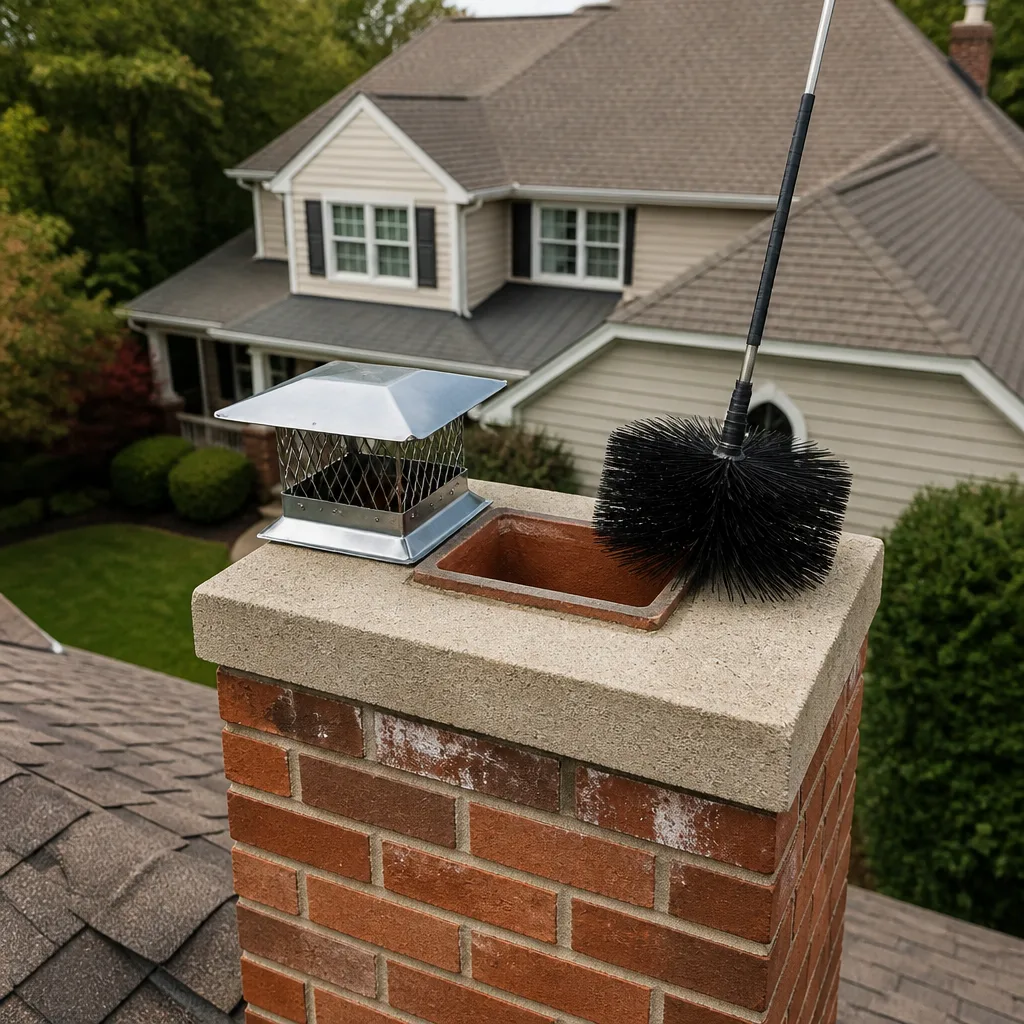 Sweep & inspection
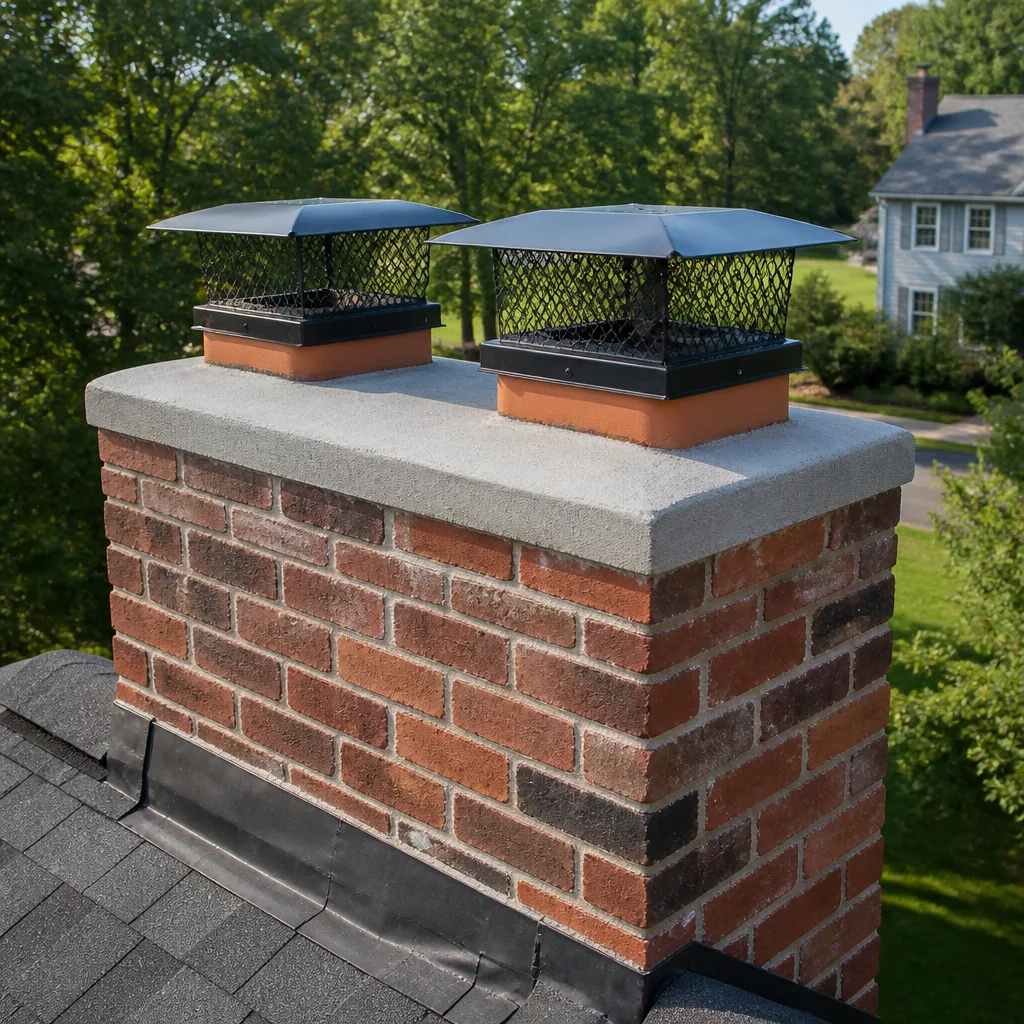 Caps & crowns
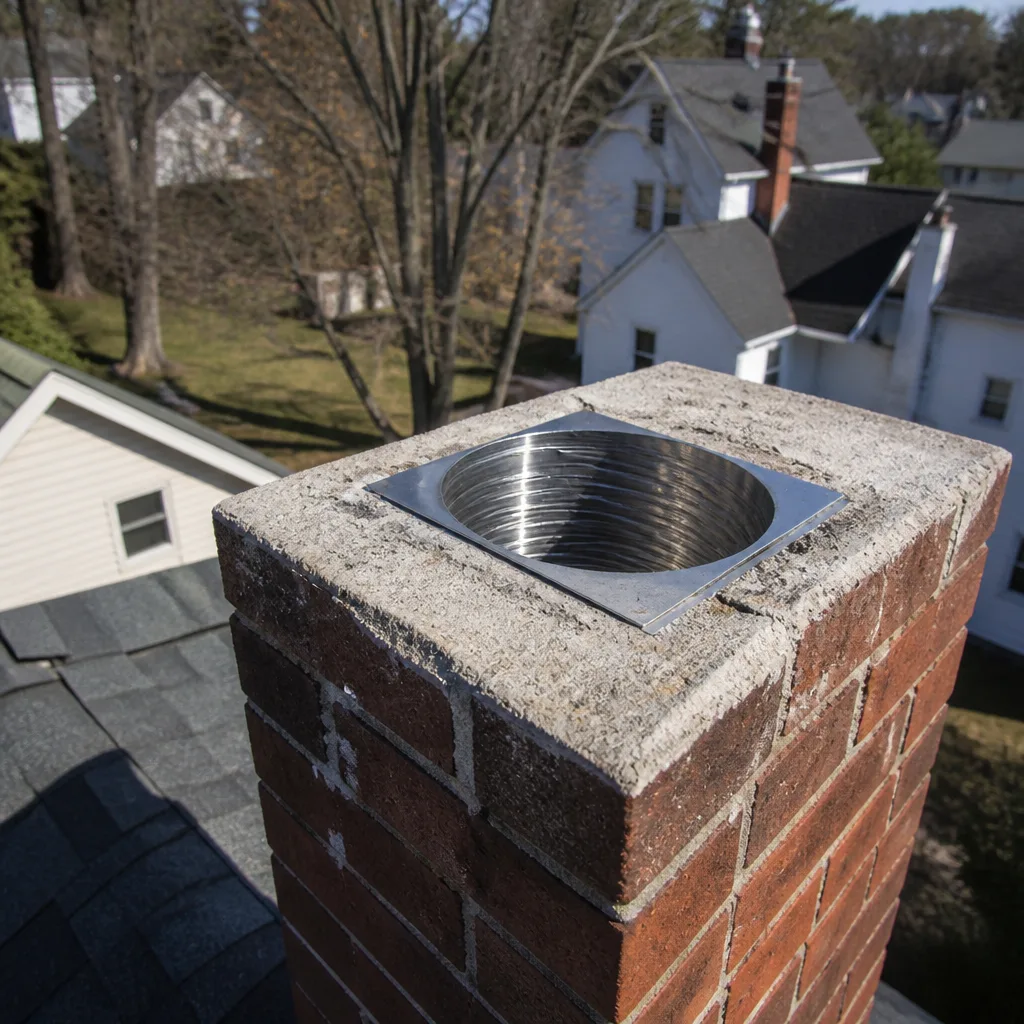 Flue relining
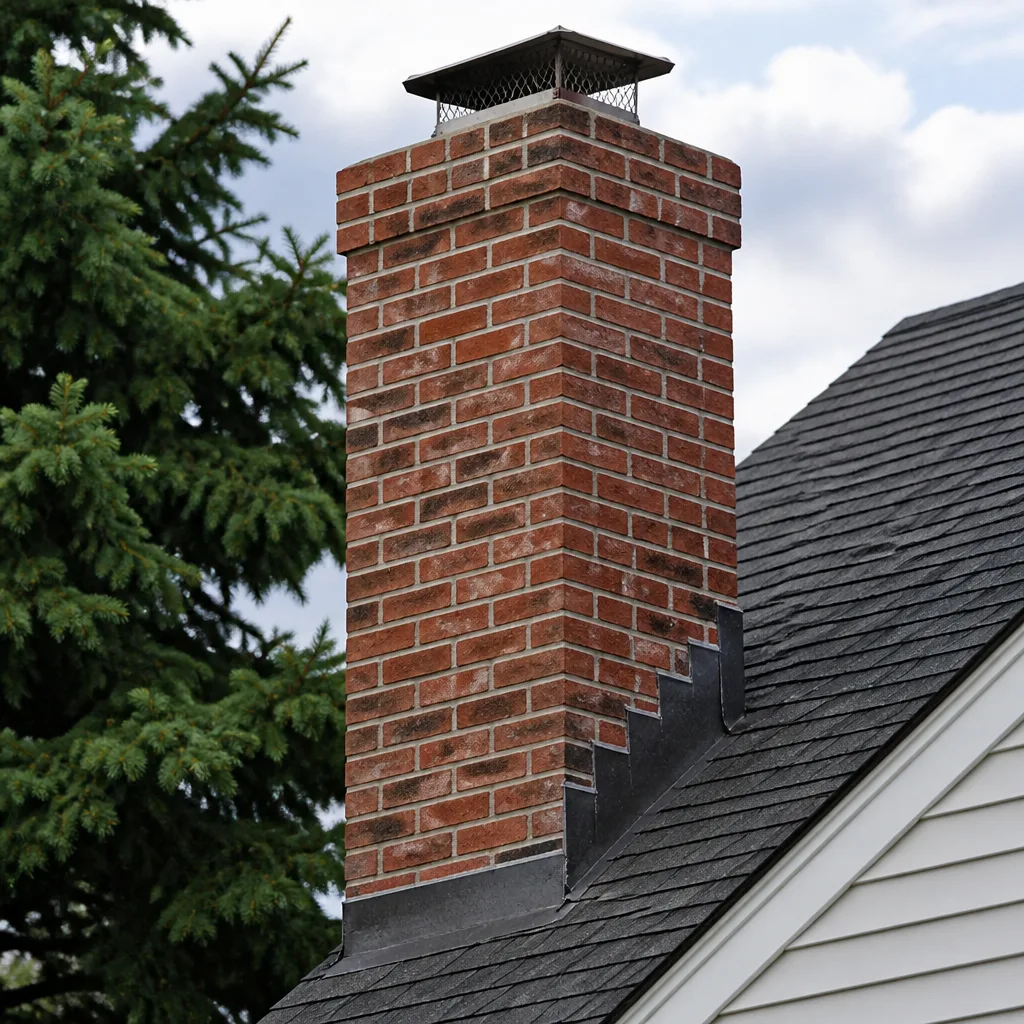 Masonry repair
 Gas fireplace service
Level 1 sweep and inspection to the NFPA 211 annual standard - flue, crown, cap, and flashing checked and photographed
Chimney sweep logs do not sweep chimneys. They loosen some creosote - which then falls where a brush and vacuum still have to collect it.
The Complete Guide to Chimney Cleaning in West Roxbury
Most chimney fires don’t start because a homeowner skipped a cleaning. They start because the cleaning happened without anyone looking at what was actually inside the flue first. A brush run down a clay tile chimney that’s already spalling, or a rotary tool pushed through a stainless liner that’s buckled, can turn a routine maintenance visit into a repair bill. That’s the part most people miss about chimney cleaning in West Roxbury: it’s a diagnostic process, not a scrubbing job. This guide walks through how your fuel type, liner material, and the age of your house shape what a real cleaning involves, what an inspection should document, and how to tell you got your money’s worth. West Roxbury homes have particular chimney profiles, and we’ll get into those.
Quick Answer
A proper chimney cleaning in West Roxbury covers three things: removal of creosote and soot from the flue, a visual inspection of the firebox, damper, smoke chamber, and liner, and a written report of what was found. The cleaning method depends on fuel type (wood, gas, or oil), liner material (clay tile, stainless steel, or cast-in-place), and the condition of the flue. A cleaning without an inspection is only half the job. Expect to schedule this annually if you burn wood regularly, and treat the inspection as the more important of the two.
Styles & brands we work with
- Sweep & inspection
- Caps & crowns
- Flue relining
- Masonry repair
- Gas fireplace service
Table of Contents
- Why Chimney Cleaning Is a Diagnostic Process, Not a Scrub
- West Roxbury’s Housing Stock and What It Means for Your Flue
- Level 1, 2, and 3 Inspections: When Each One Applies in Practice
- How Fuel Type Changes What Deposits Form and How They’re Removed
- Liner Material and Cleaning Tool Selection
- What a Legitimate Cleaning Report Should Document
- When to Schedule Chimney Cleaning in West Roxbury
- What Chimney Cleaning Costs and What Affects the Price
Why Chimney Cleaning Is a Diagnostic Process, Not a Scrub
When we send a technician up a flue, the brush is the smallest part of the job. The real work happens before the brush goes in and after it comes out. Before: confirming the flue is structurally sound enough to clean. After: documenting what the flue looked like and what was removed. A chimney is a system, and the flue is only one part of it. The firebox, damper, smoke chamber, smoke shelf, cap, crown, and flashing all interact with the flue, and any of them can undermine how the chimney performs even when the flue itself looks clean.
In our experience across West Roxbury, the biggest problems hide in the smoke chamber. This is the tapered space above the damper and below the flue, and it accumulates a rough, coked-on layer of creosote that a standard brush pass over the flue won’t touch. A home with a stubborn downdraft problem often has a smoke chamber full of this material, and it takes a dedicated tool and proper technique to clear it. Skipping that step means you pay for a cleaning and still have the draft problem.
Cleaning also does real damage when it’s approached as a surface task. A stiff poly brush works safely in most clay tile flues. The same brush fed aggressively through a liner with a compromised joint can dislodge a section. Rotary cleaning heads scour creosote fast but can gouge soft clay tile if the tile is already glazed or cracked. The right tool follows the assessment, never the other way around. That’s the difference between a chimney that gets cleaned and a chimney that gets cared for.
This matters more in a market like West Roxbury, where the housing stock varies widely in chimney design and vintage, than it would in a neighborhood built to one template. Two houses on the same street can have completely different flues, and neither homeowner knows until someone looks.
West Roxbury’s Housing Stock and What It Means for Your Flue
West Roxbury has an unusually wide mix of home styles for a Boston neighborhood: triple-deckers from the early twentieth century, colonials of several vintages, Victorians with grand but often compromised original fireplaces, and mid-century capes and ranches. Each style produces different chimney configurations, and those configurations dictate how a cleaning is done.
Triple-deckers often share a central chimney stack that served multiple flues at one time. Some unit lines have been converted to gas-fired heating, some abandoned their fireplaces altogether, and some still have a working wood-burning insert on one floor. If you own a triple-decker unit with a working fireplace, knowing which flue you’re actually on matters. Cleaning the wrong flue because the firebox connection is unclear is a common mistake in these buildings, and so is assuming the entire stack was decommissioned when it wasn’t. A proper assessment maps the flue connections before anything gets cleaned.
Colonials typically have an interior masonry chimney, which stays warmer than an exterior one and tends to produce drier deposits. Interior chimneys are usually easier to clean and less prone to the freeze-thaw damage that plagues exterior chases, though draft problems can emerge when a colonial has been remodeled and a flue no longer vents the original appliance.
Victorians tend to have multiple original fireplaces, often with ornate surrounds and badly deteriorated clay tile liners. These are the chimneys where cleaning requires the most caution. Original tile from the late 1800s has often lost its glaze, spalled internally, or shifted at the joints. A brush pass is still possible, but the inspection has to come first, and the report has to document the tile condition in detail. If the tile is compromised, a HeatShield restoration may be the right next step rather than a full rebuild, but that’s a judgment that starts with knowing what the flue looks like.
Newer construction in West Roxbury and nearby neighborhoods often uses an exterior stainless steel chimney system, sometimes paired with a wood stove or high-efficiency insert. These are cleaner and simpler to maintain, but the deposits behave differently and the inspection focus shifts to joint integrity and cap condition.
Level 1, 2, and 3 Inspections: When Each One Applies in Practice
NFPA 211 defines three inspection levels, and most homeowners have heard of them without understanding which one they actually need. Here’s the practical breakdown of what triggers each one in real West Roxbury homes.
Level 1 Inspection
A Level 1 is the standard annual inspection. It covers readily accessible portions of the chimney, firebox, damper, and flue from the top and bottom, using basic hand tools and a flashlight. It’s performed when the appliance and fuel type haven’t changed, the chimney has been maintained, and there’s no reason to suspect a problem. A Level 1 is what you get bundled with a routine annual sweep, and it’s usually enough for a homeowner who has been consistent about maintenance.
Level 2 Inspection
A Level 2 adds a camera inspection of the internal flue and covers all accessible parts of the chimney, including attics, crawl spaces, and any portions inside the building envelope. NFPA 211 requires a Level 2 in specific situations, but in practice there are more triggers than most homeowners realize:
- Buying or selling a home (this is the most common trigger by far)
- Changing the fuel type or appliance, including converting from wood to gas
- Adding a new appliance to an existing flue
- After a chimney fire, even a small one
- After an earthquake or significant structural event
- When a Level 1 turns up something suspicious
- When the liner material or installation method is unknown
In West Roxbury, the real estate trigger is the one we see most. Buyers want to know what they’re inheriting, insurance companies want documentation, and sellers want to head off a surprise at closing. A standalone chimney inspection for a real estate transaction is a legitimate Level 2 need and shouldn’t be treated as an upsell.
Level 3 Inspection
A Level 3 is diagnostic and invasive. It’s triggered when a Level 1 or 2 has revealed a hidden hazard that can’t be assessed without opening up the chimney. That could mean removing part of the crown, cutting into a wall, or dismantling a section of the chimney to see the flue interior in an inaccessible area. Level 3 inspections are rare and usually follow a known problem, not a routine concern.
Getting the inspection level right is what makes a chimney inspection actually tell you something. A Level 1 that pretends to be a Level 2 wastes money. A Level 2 that should have been Level 1 is a legitimate reason to push back on a technician who’s upselling.
How Fuel Type Changes What Deposits Form and How They’re Removed
What comes out of your chimney depends heavily on what goes into it. The three common fuels in West Roxbury homes – wood, gas, and oil – each produce a distinct set of deposits, and the cleaning approach changes with them.
Wood-Burning Chimneys
Wood produces creosote, and creosote is the reason chimney fires happen. It forms in three stages:
- First-degree creosote is light soot and flaky residue. It brushes off easily and is what you see in a well-maintained chimney that burns dry wood in a hot fire.
- Second-degree creosote is a crusty, hardened deposit. A standard poly brush alone won’t remove it fully; it usually needs a rotary cleaning tool or chemical assistance.
- Third-degree creosote is the dangerous stage: glazed, hardened, and fuel-rich. It looks like tar and doesn’t brush off at all. Third-degree creosote in the flue is a fire waiting for a reason, and cleaning it requires specialized removal methods – sometimes chemical, sometimes mechanical, and sometimes both.
Unseasoned or wet wood dramatically accelerates creosote buildup. So does a smoldering fire, which happens when the appliance runs cold most of the burn cycle. If you’re in West Roxbury and your firewood has been stored outside without cover through the winter, expect more deposit than a neighbor burning seasoned wood.
Gas-Burning Chimneys
Gas produces almost no creosote but can leave a fine white powder or deposit on the flue interior, particularly in gas fireplaces that vent through an older chimney. The bigger gas concern is condensation and appliance venting. A high-efficiency gas furnace or boiler produces acidic condensate that can attack masonry when vented into an old chimney not designed for it. Cleaning a gas flue is often less about scrubbing and more about confirming the venting arrangement is still correct.
Oil-Burning Chimneys
Oil leaves soot and sulfur-based deposits that can be aggressive on masonry and metal. Oil-fired heating systems, which remain common in older West Roxbury homes, need regular cleaning that specifically addresses soot removal and venting condition. The soot from oil can look clean when it’s actually masking liner damage, which is another reason the inspection matters as much as the cleaning.
Liner Material and Cleaning Tool Selection
The liner is the interior surface of the flue, and its material dictates the tools and technique. Cleaning the wrong liner the wrong way is the fastest route to a repair bill that dwarfs the cleaning cost.
- Clay tile liners are the standard in most pre-1990s West Roxbury chimneys. They’re durable when intact but fragile at joint transitions and prone to spalling when moisture has gotten in. Poly brushes work well. Metal brushes and aggressive rotary tools should be used cautiously and only after confirming tile integrity. If the tiles are cracked or the mortar joints have failed, cleaning itself can dislodge mortar and shift tile. That’s a scenario where the technician should stop, document, and recommend a liner solution rather than push through.
- Stainless steel flexible liners are common in retrofits and newer installations. DuraFlex and Copperfield systems are the kind of flexible stainless liners we routinely work with. Stainless cleans well with most tools, but seams and corrugations trap deposit and require the right brush size. Oversized brushes can catch on corrugation ridges, and any sign of buckling, cracking at the seams, or separation from a fitting means the liner should be evaluated before cleaning continues.
- Cast-in-place liners are the poured refractory liners often installed in older homes as an add-on. They’re generally smooth and clean well, but they can develop hairline cracks over time. During cleaning, we watch for cracks that widen under tool contact, which is a signal the liner needs closer evaluation.
When a clay liner has deteriorated but the chimney structure itself is sound, HeatShield is the restoration approach worth considering. It resurface and repairs the existing clay flue from the inside, which addresses cracking and spalling without a full rebuild. It’s not right for every chimney, but for the older Victorians and colonials in West Roxbury with original tile, it’s often the more sensible option than tearing into the chimney structure. When a full reline is necessary, flexible stainless systems from DuraFlex and Copperfield do the job.
What a Legitimate Cleaning Report Should Document
A cleaning report is the record of what was done, and it’s how you verify the work without climbing a ladder yourself. Here’s what a real report should contain:
- Photos before, during, and after. At minimum, photos of the firebox, damper, smoke chamber, and flue top and bottom. Without photos, the customer has no way to know what was actually inspected or cleaned.
- Fuel type and appliance identification. What’s burning in the chimney, what appliance is connected, and whether the venting arrangement matches.
- Level of inspection performed and why that level was chosen. If a Level 2 was performed, the report should say so, and the camera footage should be available.
- Condition of the liner with terminology a homeowner can understand. “Cracking observed in tile at flue joint” is documentation; “flue looks fine” is not.
- Extent of creosote found, ideally noting the degree and location. “Moderate, above the damper” tells you more than “some buildup.”
- Parts of the system not inspected and why, if access was blocked. This matters because a lot of problems live in the areas technicians can’t reach on a given visit.
- Recommendations and priority level, distinguishing between what needs attention now and what can wait until next season. Anything flagged as urgent should be accompanied by the evidence that supports the flagging.
- Technician name and date so the report has a clear provenance if it’s needed for insurance or a real estate transaction.
A cleaning report should also state clearly whether the work was completed and whether any pre-existing damage was observed. If a customer looks at the report and can’t tell what was done, the report didn’t do its job. Our technicians have up to 11 years of experience, and they write reports they’d want to receive themselves.
When to Schedule Chimney Cleaning in West Roxbury
The right window for a chimney cleaning in West Roxbury is late summer into early fall, before the heating season gets going. That’s when the backlog is thinnest, the schedule is most flexible, and any repair work that comes out of the inspection can be completed before the fireplace is in regular use. Winter cleaning is possible, but it competes with the busiest stretch of the year and leaves less margin if something turns out to need attention.
Beyond the calendar, there are specific triggers that mean it’s time regardless of season:
- You’ve burned a full cord of wood since the last cleaning
- The fireplace smells smoky when it isn’t burning
- You’ve noticed a stronger smell in the house on damp days
- Your smoke draws poorly or the fire smokes at startup more than it used to
- You see black or glazed deposit on the firebox walls
- You’ve had a chimney fire, even a small one
- You’re buying or selling a home, or your insurer has asked for documentation
Annual cleaning is the right default for anyone who burns wood regularly. If your fireplace is decorative and rarely used, a two- or three-year interval with a proper inspection each time is a defensible approach, though we usually recommend sticking with an annual inspection anyway. The inspection finds problems that a cleaning alone doesn’t look for, and West Roxbury’s freezing winter cycles make exterior masonry a real candidate for freeze-thaw damage you’d want to catch early.
For homes with gas or oil appliances venting through the chimney, the schedule depends more on the appliance and the liner condition than on burn frequency. Heating-season checkups on oil systems and inspections after any gas appliance change are the practical rhythm.
What Chimney Cleaning Costs and What Affects the Price
Chimney cleaning pricing in the Boston area runs roughly $250 to $550 for a standard wood-burning chimney cleaning with a Level 1 inspection, but that range depends on a lot of variables. Supply and access matter as much as the cleaning itself. A straight flue with a standard cap is a simpler job than a chimney with multiple flues, a terrace or scaffolding requirement, or an interior chase with limited access. Those access differences are why a quote over the phone has to be treated as a range, and why the written estimate sets the final price.
- Standard flue cleaning with Level 1 inspection: typical range for the Greater Boston area is roughly $250 to $550, depending on access and flue complexity
- Level 2 inspection (camera + accessible parts): typically quoted separately and priced based on the number of flues and access difficulty
- Third-degree creosote removal: priced above a standard cleaning because it requires different tools and technique
- Liner restoration or replacement (HeatShield, DuraFlex, Copperfield): priced per job based on the liner length, material, and diagnosis
- Cap and crown installation: priced per job based on the cap style, crown condition, and access
Every quote we give in West Roxbury starts with the same principle: the estimate is free, the written estimate sets the final price, and nothing is recommended that isn’t supported by what we found during the inspection. You should be able to look at the diagnostic evidence – photos, camera footage, and the report – and see exactly why a recommendation was made. Anything else isn’t a chimney diagnosis; it’s a sales pitch.
If you’re facing a quote for liner work from another contractor and want a second opinion, that’s a valid reason to call. It’s also the reason we include the camera inspection in the report. Homeowners in West Roxbury shouldn’t have to take “you need a new liner” on faith. They should be able to see the flue.
Common Mistakes to Avoid
- Treating cleaning and inspection as the same thing. A cleaning removes deposits. An inspection tells you whether the flue is safe to keep using. Skipping the inspection is how people end up with a clean-looking chimney that still isn’t safe.
- Assuming a clean flue is a safe flue. Cracks, spalling, and liner damage don’t show up in a general sweep. A flue that looks tidy from the firebox can have a badly compromised interior, especially in the older West Roxbury Victorians with original clay tile.
- Using a general handyman for a chimney job. Chimney work involves specific tools, specific materials, and a specific understanding of how all the components work together. A generalist can usually manage a basic sweep, but the diagnosis depends on someone who works on chimneys every day.
- Delaying a Level 2 inspection during a real estate transaction. Buyers who skip the camera inspection often inherit an expensive hidden issue, and sellers who skip it face renegotiation at closing. Whoever is paying for the inspection benefits from doing it once, properly.
- Letting third-degree creosote sit through the season. That glazed layer is the fuel for a chimney fire, and it doesn’t come off with a standard brush. If your technician flags it, treat the fix as a priority rather than something for next year.
- Burning wet wood to save money on firewood. Wet wood is the leading contributor to heavy creosote buildup in our experience. Storing firewood under cover for a full season costs less than the extra cleaning and liner risk that wet wood creates.
- Ignoring the cap and crown until damage shows up inside. West Roxbury’s freeze-thaw cycles are rough on crown mortar and flashing. A small crack in a crown can let water into the chimney structure, and by the time it shows up as a stain on the ceiling, the repair has gotten more involved than a chimney cap & crown installation would have been.
See the difference
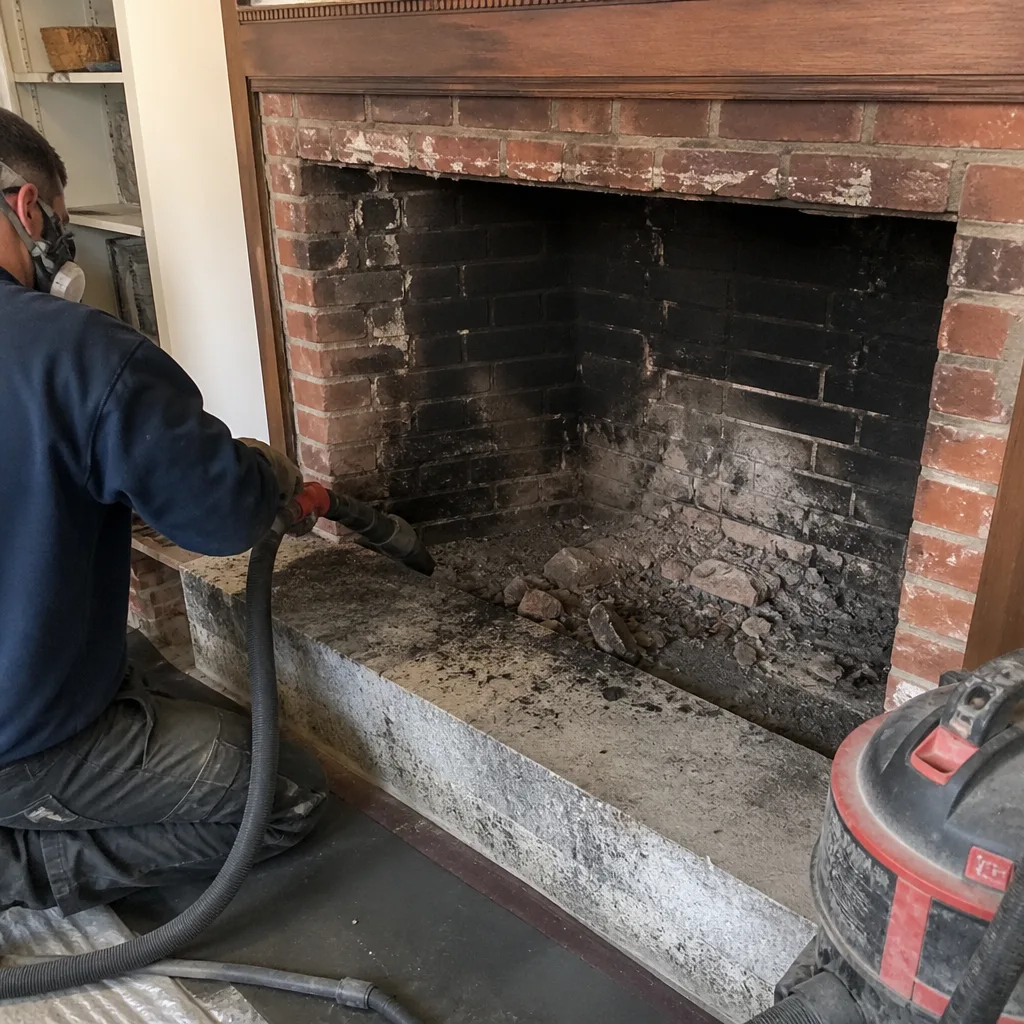 Before
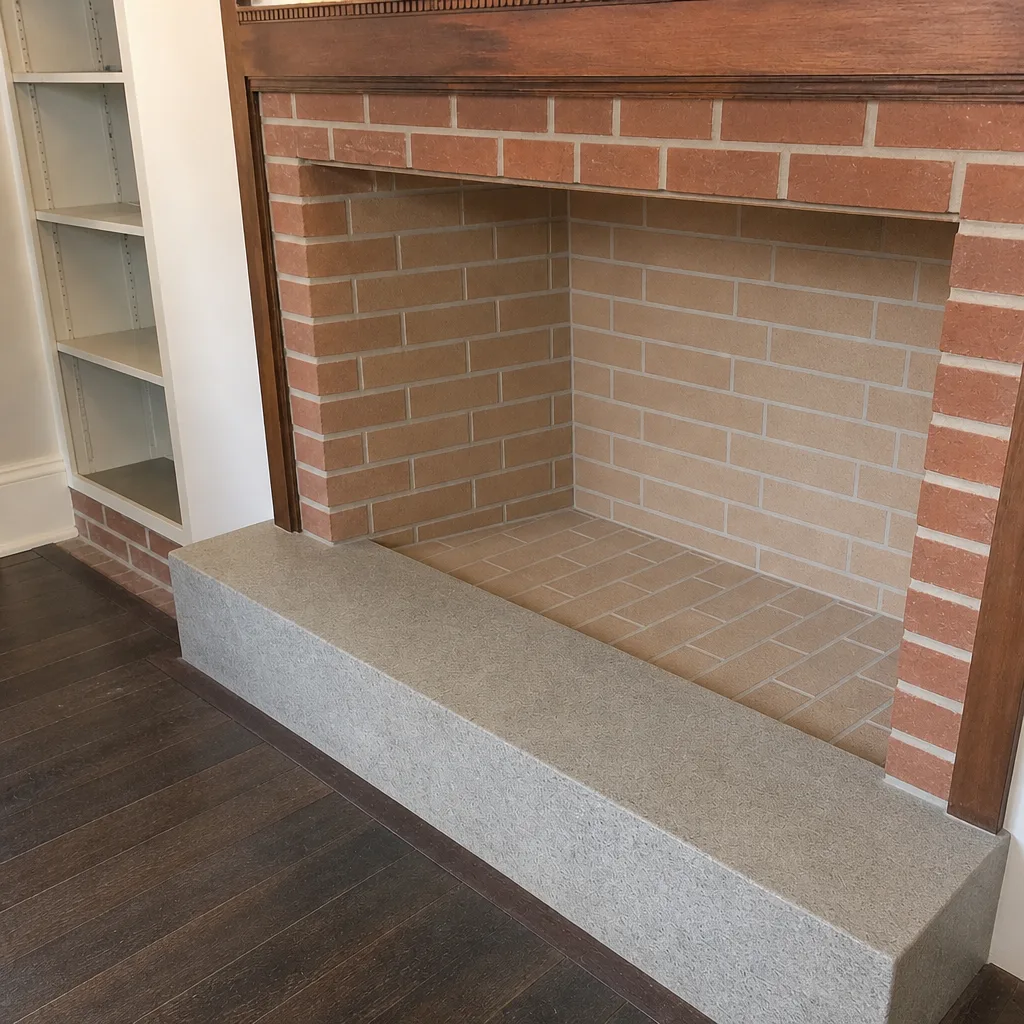 After
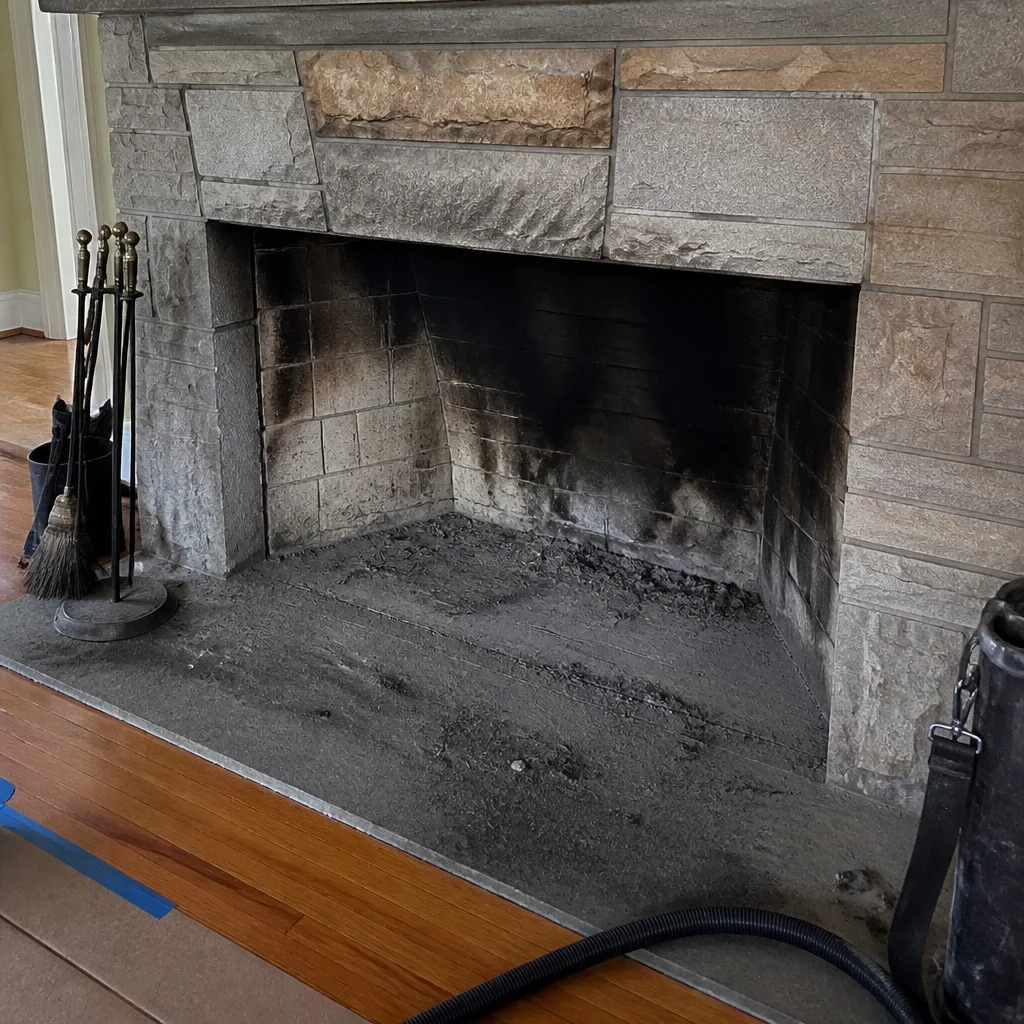 Before
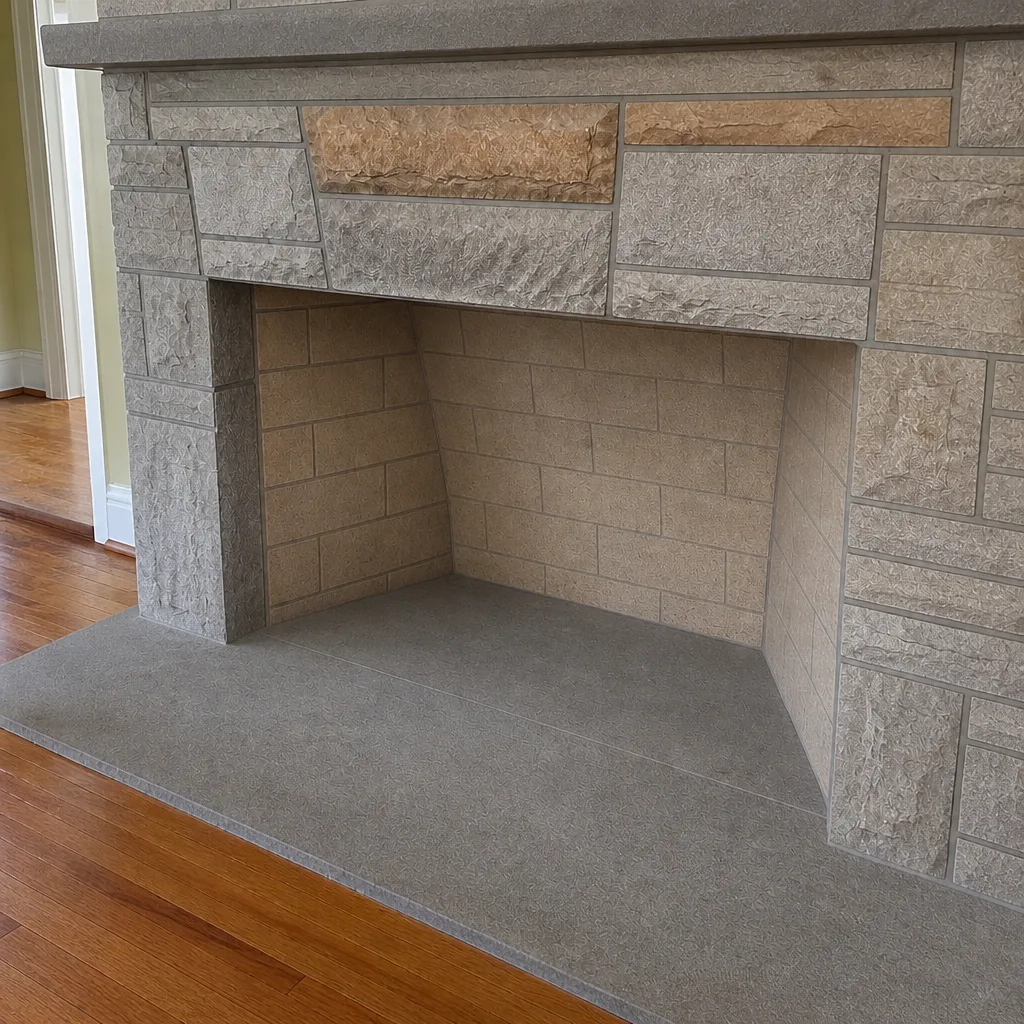 After
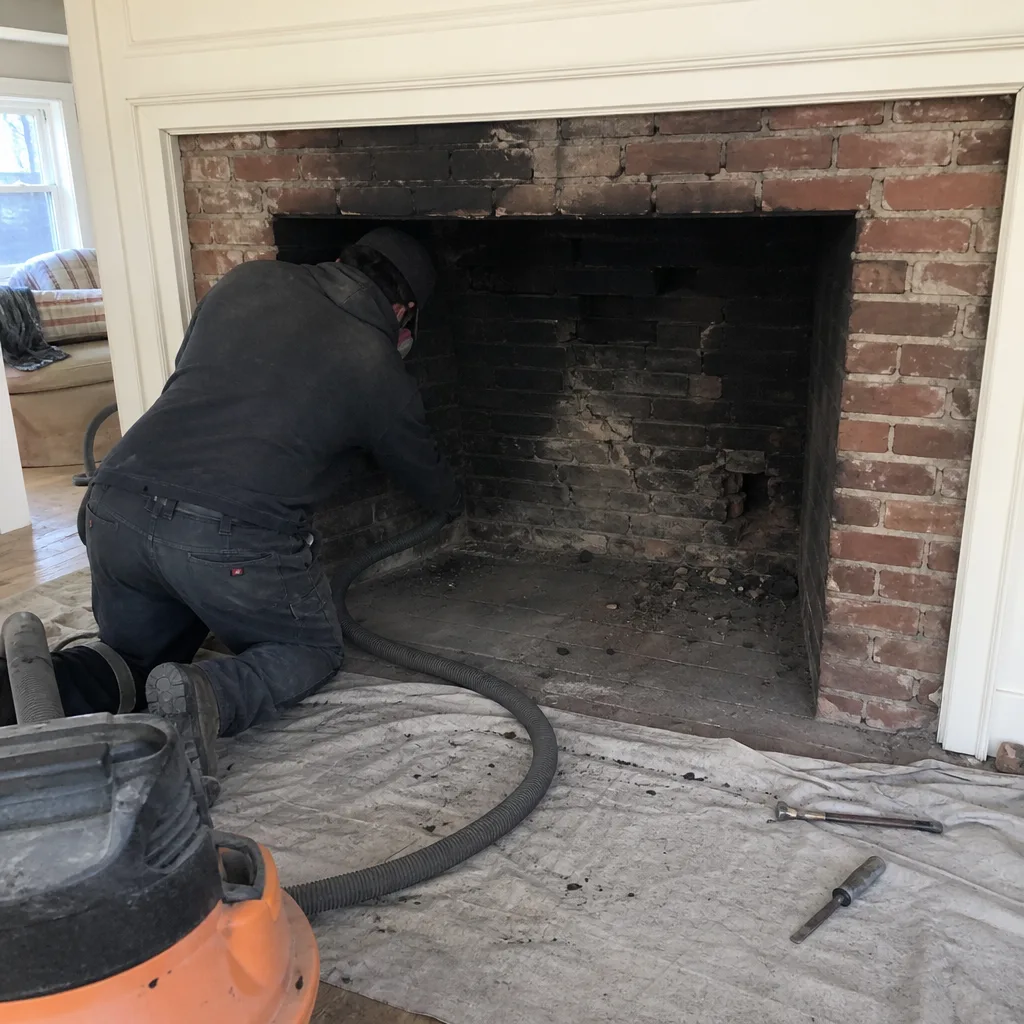 Before
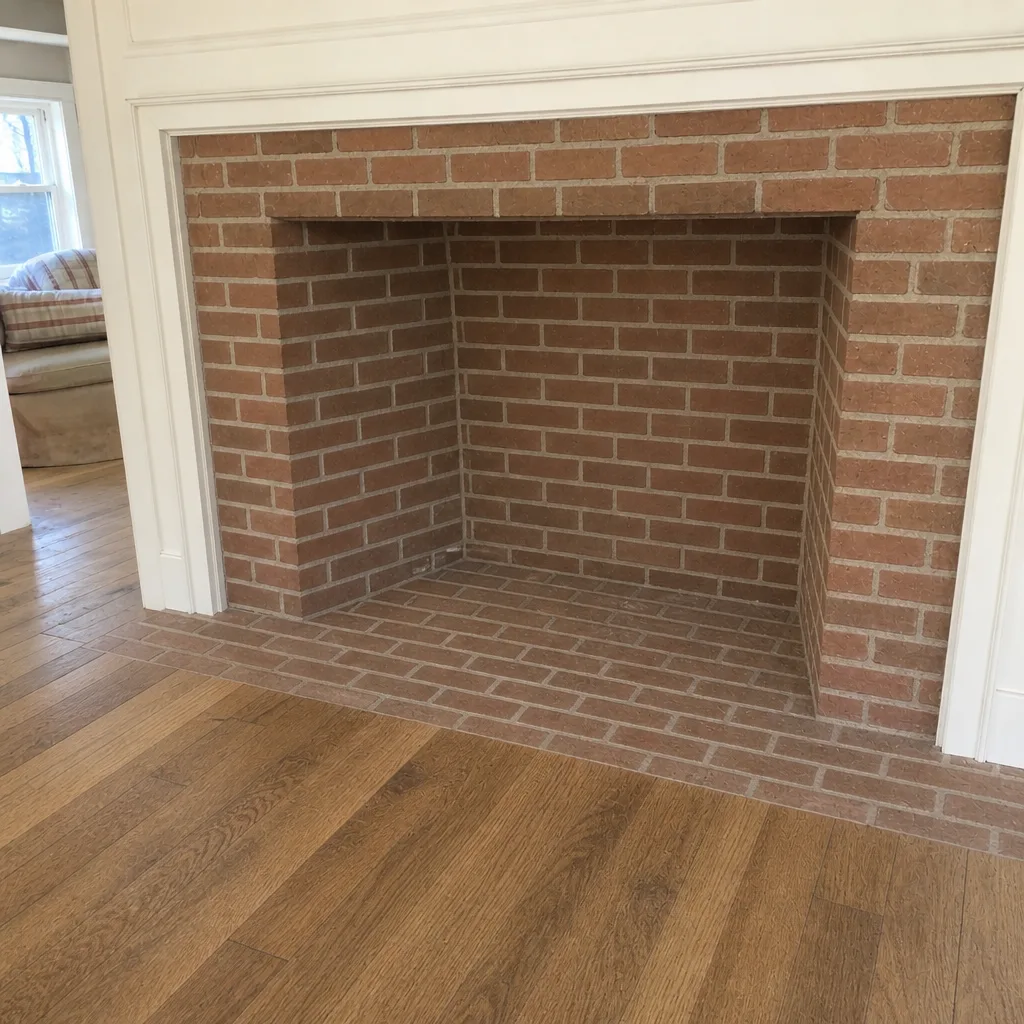 After
When to Call a Professional
Some chimney issues clearly need a professional: creosote accumulation you can see on the firebox walls, smoke that backs up into the room, water stains on the chimney exterior or a nearby ceiling, a chimney fire, or anything involving a gas or oil appliance venting through the chimney. Structural issues – a chimney leaning away from the house, cracked or missing mortar joints, spalling brick – are professional territory too. Cleaning itself is residential work most people shouldn’t do without training, and the inspection that should accompany it is definitely not a DIY job. If you’re buying or selling a home in West Roxbury, an inspection as part of the transaction is the right call. Chimney Sweep West Roxbury offers free estimates in West Roxbury – call (833) 991-9334 to schedule a cleaning or inspection.
Frequently Asked Questions
A standard chimney cleaning with a Level 1 inspection typically runs $250 to $550 in the Greater Boston area, depending on access, flue complexity, and the level of deposit. A written estimate sets the final price, and estimates are free. Call (833) 991-9334 for an exact quote.
Yearly, if you burn wood regularly. Homeowners who burn occasionally can often stretch to every two or three years, but the annual inspection should still happen. West Roxbury’s freezing cycles make unseen masonry damage a real concern that a once-a-year check catches early. Call (833) 991-9334 to book a cleaning and inspection.
You need a new liner when the existing liner can no longer safely contain the flue gases and heat from your appliance. The way to verify that is to see the evidence yourself: camera footage, photos, and a written report that quotes the specific condition found. If the technician can’t show you the problem, ask why. Call (833) 991-9334 for a second opinion with photos included.
A sweep removes deposits from the flue; an inspection assesses the condition of the whole chimney system. You can have one without the other, but a cleaning without an inspection tells you nothing about whether the chimney is safe. Our chimney sweep visits include an inspection as part of the standard scope.
Creosote accumulates in the flue, and if it reaches the glazed stage, the chimney becomes a fire risk every time you burn. Skipping also means liner damage and structural problems go unnoticed until they’re more expensive to fix. Skipping isn’t a safety incident in itself, but it removes the check that keeps one from happening.
Yes, cleaning is possible year-round, though late summer and fall are the practical windows because scheduling is easier and any repairs can be completed before heavy use. If your chimney needs attention now, call (833) 991-9334 and we’ll find a slot, even if the fireplace has already been lit this season.
The Bottom Line
Chimney cleaning in West Roxbury is a diagnostic process, not a scrubbing service. The right approach starts with understanding the fuel type, liner material, and configuration of your specific chimney, then matches the cleaning method and inspection level to what’s actually there. Get the inspection right and the cleaning follows. Skip the inspection and you’ve only addressed the surface. Whether you need a routine annual sweep, a fireplace repair, structural chimney repair, or a diagnosis of what’s inside the flue, the entire system is what we work on. We’re Chimney Sweep West Roxbury – a dedicated chimney specialist, not a generalist. Whether you’re planning ahead for the season or dealing with a problem now, call (833) 991-9334 for a free estimate. We answer 24/7. Fast dispatch from 7am to 7pm, Sunday through Friday.
Written by the team at Chimney Sweep West Roxbury.